A New Door of Hope: UN Approval Brings Rehabilitation Care Closer to Children in North Korea
For families raising children with developmental disabilities, access to specialized medical care and rehabilitation can make an extraordinary difference. A child with cerebral palsy may need physical therapy to develop greater mobility. A child with autism may benefit from sensory and developmental interventions that help them engage more fully with the world around them. For parents, having someone who understands their child's needs and can offer practical guidance can bring much-needed encouragement and hope.
Yet for many families in North Korea, particularly in the northeastern region of Rason, these essential services have been largely unavailable.
On September 18, 2026, Ignis Community received approval from the United Nations Security Council 1718 Sanctions Committee to ship much-needed medical rehabilitation and therapeutic equipment to the Democratic People's Republic of Korea (DPRK).
This approval represents another important step toward our goal of establishing sustainable pediatric rehabilitation services for children with developmental disabilities in Rason.
Earlier this year, we shared the encouraging news that Ignis Community had received a General License from the U.S. Department of State, allowing us to continue and expand our humanitarian work in North Korea. We have been especially grateful for the consistent support of the U.S. Department of State for Ignis Community's humanitarian efforts, even amid the many political and diplomatic challenges surrounding engagement with the DPRK.
Such support is vital. Humanitarian engagement with North Korea requires navigating complex international sanctions, regulatory requirements, and logistical obstacles. The State Department's continued support, together with the recent UN exemption, provides an important pathway for delivering essential medical resources to vulnerable communities.
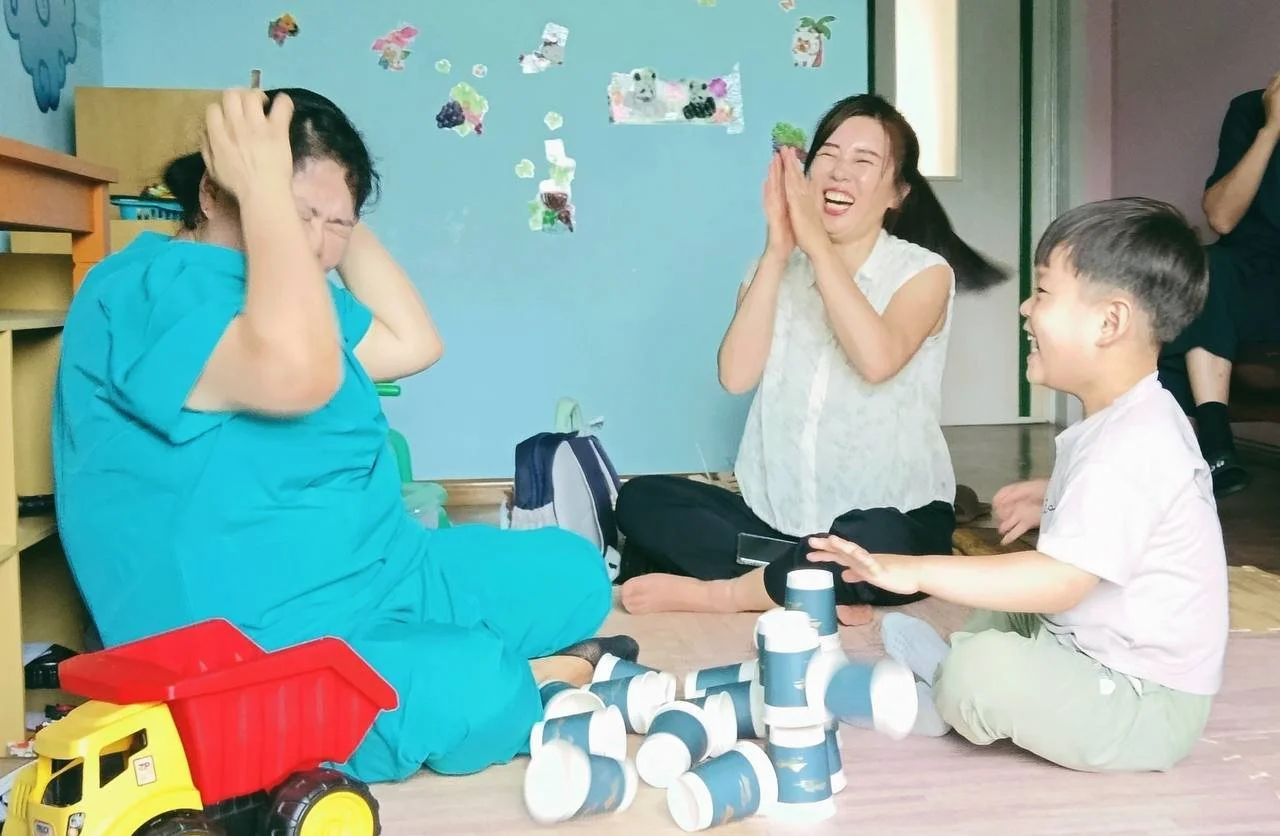
Currently, Ignis Community is treating developmental disabilities with minimal therapeutic resources
For nearly two decades, Ignis Community has worked to address the needs of children and families in North Korea through nutrition programs, shoe distributions, medical assistance, and professional training. In recent years, our work has increasingly focused on an especially underserved population: children with developmental disabilities.
Earlier this year, our medical team began providing pediatric rehabilitation services in Rason, treating children with cerebral palsy, autism, and developmental delays. We also provided training to 50 North Korean medical professionals, introducing approaches to understanding developmental disabilities and supporting children through rehabilitation.
One of the most encouraging aspects of this work has been the willingness of local medical professionals to learn and their genuine desire to provide better care for these children. But training alone is not enough. Doctors and therapists also need appropriate equipment, assessment tools, and therapeutic resources to put their knowledge into practice. That is why this latest UN approval is so meaningful.
The newly approved shipment includes a comprehensive range of rehabilitation and therapeutic equipment intended to strengthen the capabilities of medical professionals serving children with developmental disabilities in Rason. Among the approved items are specialized physical therapy equipment, including treatment tables, parallel bars, standing and positioning devices, balance-training tools, and therapeutic exercise equipment. These resources can help therapists work with children who struggle with muscle control, posture, coordination, and mobility.
The shipment also includes sensory integration equipment such as therapeutic swings, sensory balls, weighted vests, and other tools that can be incorporated into individualized therapeutic activities for children with sensory processing difficulties. Developmental assessment materials, fine motor training tools, educational resources, and adaptive equipment will further support professionals in evaluating children's abilities and developing more targeted rehabilitation programs. Some of the larger rehabilitation devices, including motor-assisted exercise equipment, will provide additional options for children who require assistance with movement and physical rehabilitation.
To many of us, these may seem like ordinary tools found in rehabilitation clinics or therapy centers. But in a region where specialized pediatric rehabilitation resources have been extremely limited, they represent an opportunity to introduce new approaches to treatment and care. A therapy ball may help a child practice balance and postural control. A set of parallel bars may provide support as a child works toward greater mobility. A simple fine motor activity may help a child develop skills needed for writing, dressing, or feeding.
Behind every piece of equipment is the possibility of a child gaining greater independence, a parent finding renewed encouragement, and a medical professional becoming better equipped to provide meaningful care.
Our goal has never been simply to deliver medical equipment or provide occasional treatment. Rather, we hope to help establish a sustainable system of rehabilitation in which local medical professionals are equipped to care for children with developmental disabilities over the long term.
This means investing not only in equipment but also in relationships, education, and hands-on clinical training. We envision a future in which families in Rason can receive ongoing developmental assessments, individualized rehabilitation services, and practical guidance for supporting their children at home.
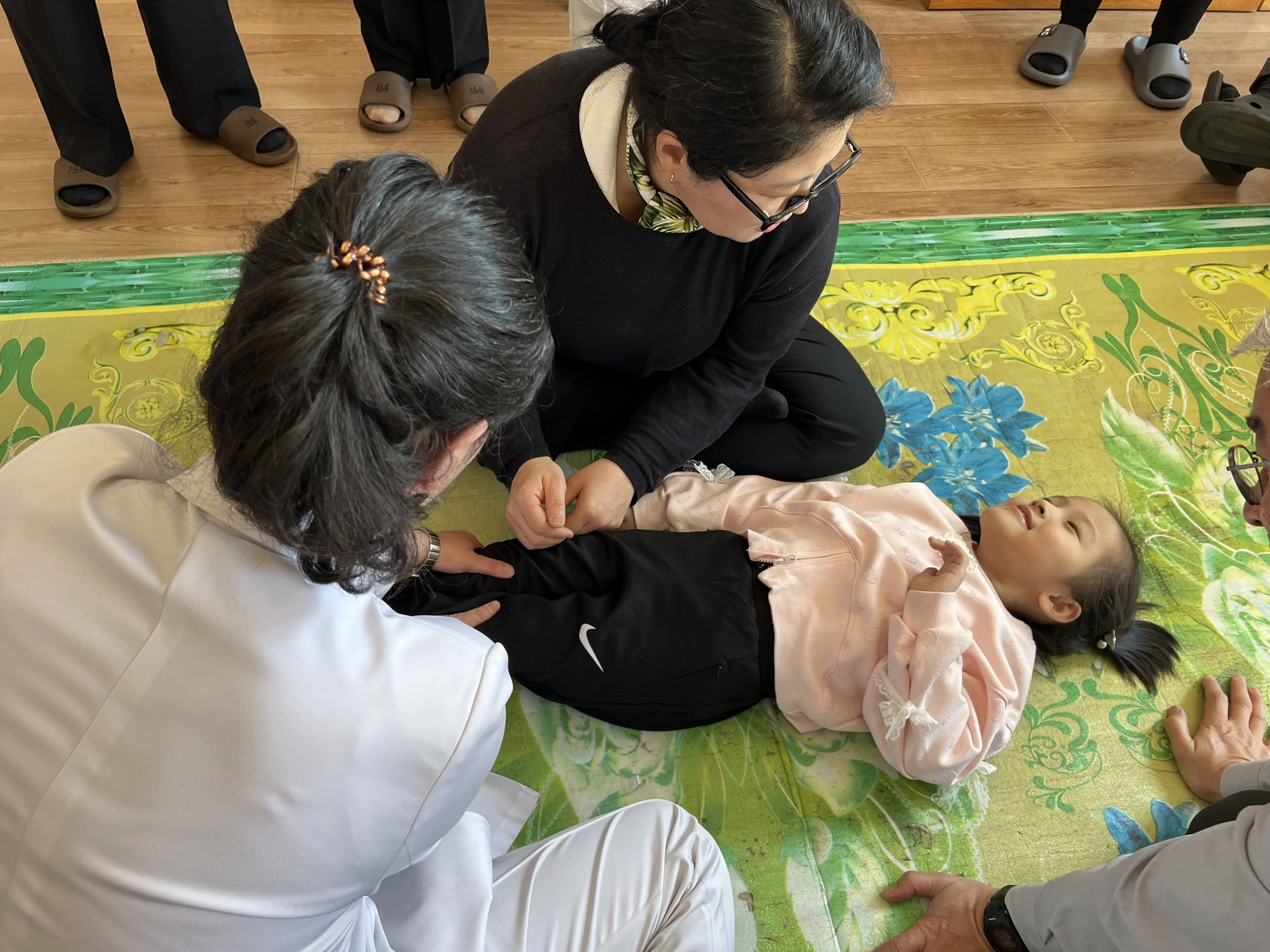
Ignis Community provides hands-on training for doctors while treating pediatric patients
Parents are an essential part of this vision. When families understand their children's developmental needs and learn appropriate activities they can incorporate into daily life, rehabilitation can extend beyond the hospital or clinic and into the home. Our hope is to develop a community-based approach in which doctors, therapists, parents, and caregivers work together to help children reach their fullest potential.
The UN exemption is a significant step toward making this vision a reality, but important work still lies ahead. We must now coordinate the acquisition, transportation, customs clearance, and eventual delivery of the approved equipment. These processes require patience, cooperation, and careful coordination among multiple partners. Yet each step brings us closer to expanding access to much-needed rehabilitation services.
Working in North Korea has taught us that meaningful humanitarian engagement often requires perseverance through uncertainty. Political tensions may rise and fall. Borders may open and close. International circumstances may change. Yet the needs of vulnerable children and families remain.
A child with cerebral palsy still needs assistance learning to move. A child with autism still needs understanding and appropriate developmental support. Parents still long to see their children grow, learn, communicate, and participate more fully in everyday life. These needs transcend politics, nationality, and borders.
We are deeply grateful to the United Nations Security Council 1718 Sanctions Committee for approving this humanitarian exemption and to the U.S. Department of State for its continued support of Ignis Community's work. We are equally grateful for the cooperation of our North Korean medical partners, who share our desire to improve care for children with developmental disabilities.
Despite the many obstacles, continued international cooperation is creating new opportunities to address the needs of some of the most vulnerable children in North Korea. As we prepare for the next phase of this project, we invite our friends, partners, and supporters to follow our progress and help us continue expanding access to essential rehabilitation services.
Our hope is that these resources will do far more than fill the rooms of a rehabilitation center. We hope they will help create opportunities for children who have had little access to specialized care and strengthen the capacity of local professionals to serve them for years to come.
Every child deserves the opportunity to grow, develop, and experience the dignity of compassionate care—regardless of where they were born.
And with each new milestone, we are one step closer to making that hope a reality.